
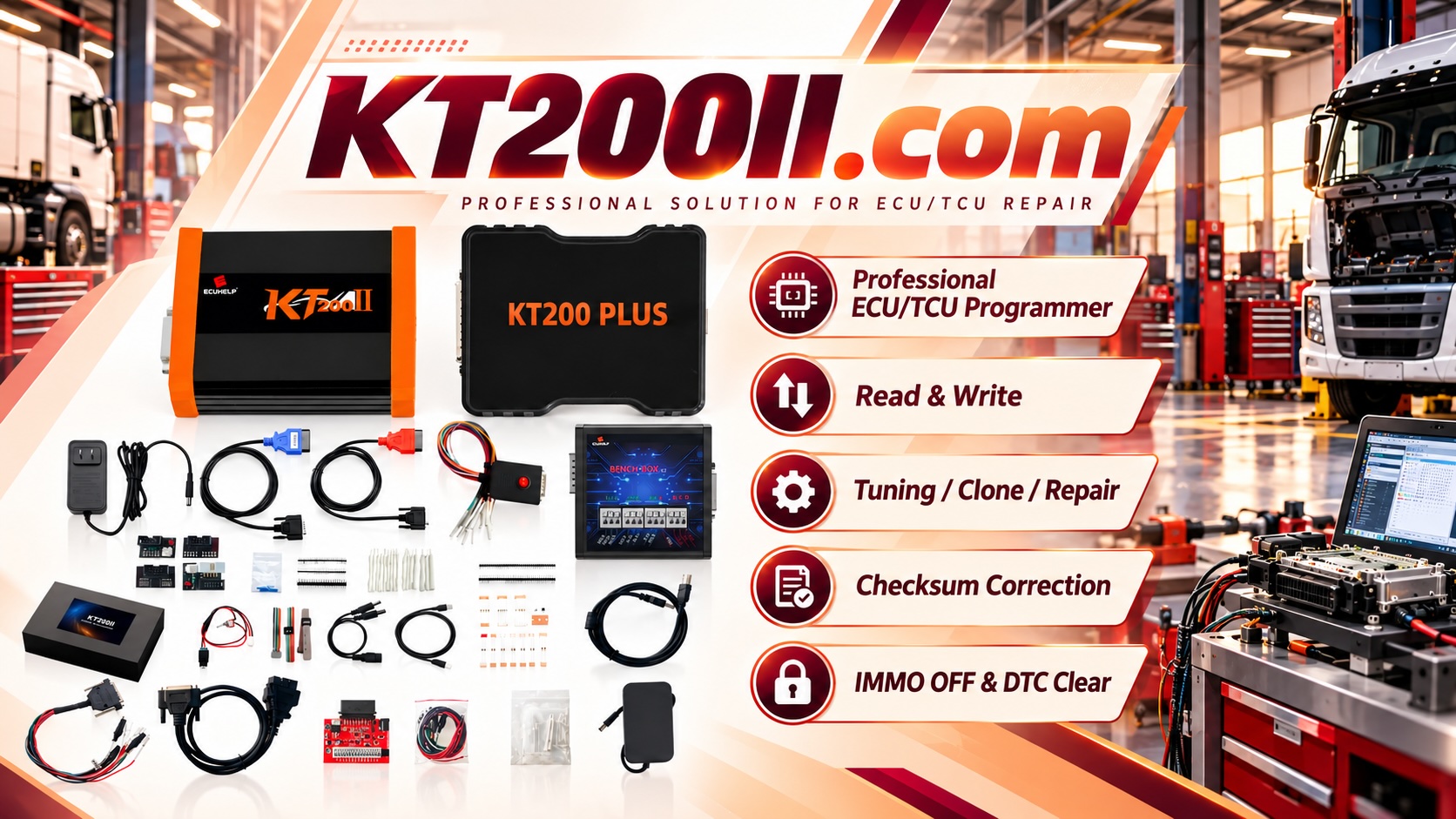
How to Start an ECU Programming Business: Complete Workshop Guide
The automotive repair industry is becoming increasingly dependent on electronic systems. Modern vehicles use multiple control modules to manage engine operation, transmission systems, safety functions and vehicle communication.
As a result, ECU programming has become an important service opportunity for automotive technicians and repair businesses.
Starting an ECU programming business requires more than purchasing a programming tool. A successful workshop needs the right equipment, technical knowledge, organized workflow and professional service capability.
Why ECU Programming Services Are Growing
Traditional mechanical repairs are no longer enough for many modern vehicles. Electronic control units are now involved in many vehicle functions.
Customers and workshops increasingly require services such as:
- ECU replacement
- ECU cloning
- ECU backup
- ECU recovery
- ECU programming
- TCU programming
These services create opportunities for automotive electronics specialists who can provide professional ECU solutions.
Step 1: Understand ECU Programming Services
Before starting an ECU programming business, technicians should understand the main services they plan to offer.
ECU Reading and Writing
Reading and writing ECU data is the foundation of many programming operations.
Common applications include:
- Software transfer
- Module replacement
- Data backup
- Programming updates
ECU Cloning
ECU cloning involves transferring required data from an original ECU to a compatible replacement module.
It is commonly used when:
- The original ECU is damaged
- A replacement ECU is required
- Vehicle-specific data needs to be transferred
ECU Recovery
Some damaged or failed programming operations may require recovery procedures.
Professional recovery capability can help workshops handle more advanced repair cases.
Step 2: Choose Professional ECU Programming Equipment
The ECU programmer is the core equipment of an ECU programming workshop.
A professional ECU programmer should support:
- Multiple vehicle applications
- ECU and TCU programming
- Different communication methods
- Backup and cloning operations
- Software updates
The KT200II ECU Programmer is designed for professional ECU and TCU programming operations on supported applications.
KT200II supports different operation methods according to ECU requirements, including:
- OBD Mode
- Bench Mode
- Boot Mode
- JTAG Mode
- BDM Mode
Step 3: Prepare Your ECU Programming Workspace
A professional working environment improves efficiency and reduces mistakes.
A basic ECU programming workstation should include:
- Reliable computer
- Stable power supply
- ECU programmer
- Connection cables
- Adapters
- Organized storage system
Keeping cables, files and vehicle records organized is important for professional ECU services.
Step 4: Learn ECU Identification and Testing
Correct ECU identification is one of the most important skills for technicians.
Before programming, always confirm:
- Vehicle brand and model
- Engine or transmission type
- ECU manufacturer
- Hardware number
- Software version
- Processor information
Incorrect identification may result in failed communication or incorrect programming.
Step 5: Build a Professional ECU Programming Workflow
A reliable workflow helps technicians complete jobs safely.
- Identify ECU information
- Check compatibility
- Select correct programming method
- Create original ECU backup
- Perform programming operation
- Verify ECU communication
- Save repair records
Following the same procedure for every job reduces mistakes and improves customer confidence.
Step 6: Understand Different Programming Methods
OBD Programming
OBD programming uses the vehicle diagnostic connector.
Advantages:
- No ECU removal required
- Fast operation
- Convenient for supported vehicles
Bench Programming
Bench programming connects directly to the ECU outside the vehicle.
It is commonly used for:
- ECU backup
- ECU cloning
- Replacement ECU preparation
Boot Programming
Boot mode provides deeper ECU access for selected control units.
It is commonly used for advanced ECU repair and recovery procedures.
Step 7: Build Technical Knowledge
Successful ECU programming businesses require continuous learning.
Technicians should understand:
- Vehicle communication systems
- CAN Bus
- ECU memory structure
- Flash and EEPROM
- Programming procedures
Automotive electronics continue to develop, so technical knowledge is a long-term investment.
Common Mistakes When Starting an ECU Programming Business
Buying Equipment Without Checking Support
Before purchasing equipment, technicians should confirm supported vehicle applications and programming methods.
The official KT200II Support List provides compatibility information for supported applications.
Ignoring Backup Procedures
Professional ECU work should always begin with protecting original data.
Focusing Only on Hardware
A successful ECU business requires equipment, software support, technical knowledge and good workflow management.
Keep ECU Programming Software Updated
Vehicle manufacturers continue introducing new ECU systems and software technologies.
Regular software updates help technicians maintain compatibility with newer applications.
The latest resources are available through:
Conclusion
Starting an ECU programming business can provide valuable opportunities for automotive electronics specialists.
A successful workshop requires professional equipment, correct procedures, technical knowledge and continuous improvement.
By building a reliable ECU programming workflow and offering services such as ECU backup, cloning, repair and programming, technicians can develop a professional automotive electronics service business.